
A thirteen week forecast that checks itself against the bank.
Each forecast line is compared with what actually cleared, so the forecast improves week after week instead of being rebuilt every quarter.
How the forecast is built
Start from actuals
Twelve months of cleared transactions give each category its baseline.
Add what you know
Owners add known receipts and payments, such as a tax date or a supplier run.
Measure the gap
Every Monday the previous week is scored, line by line, against the bank.
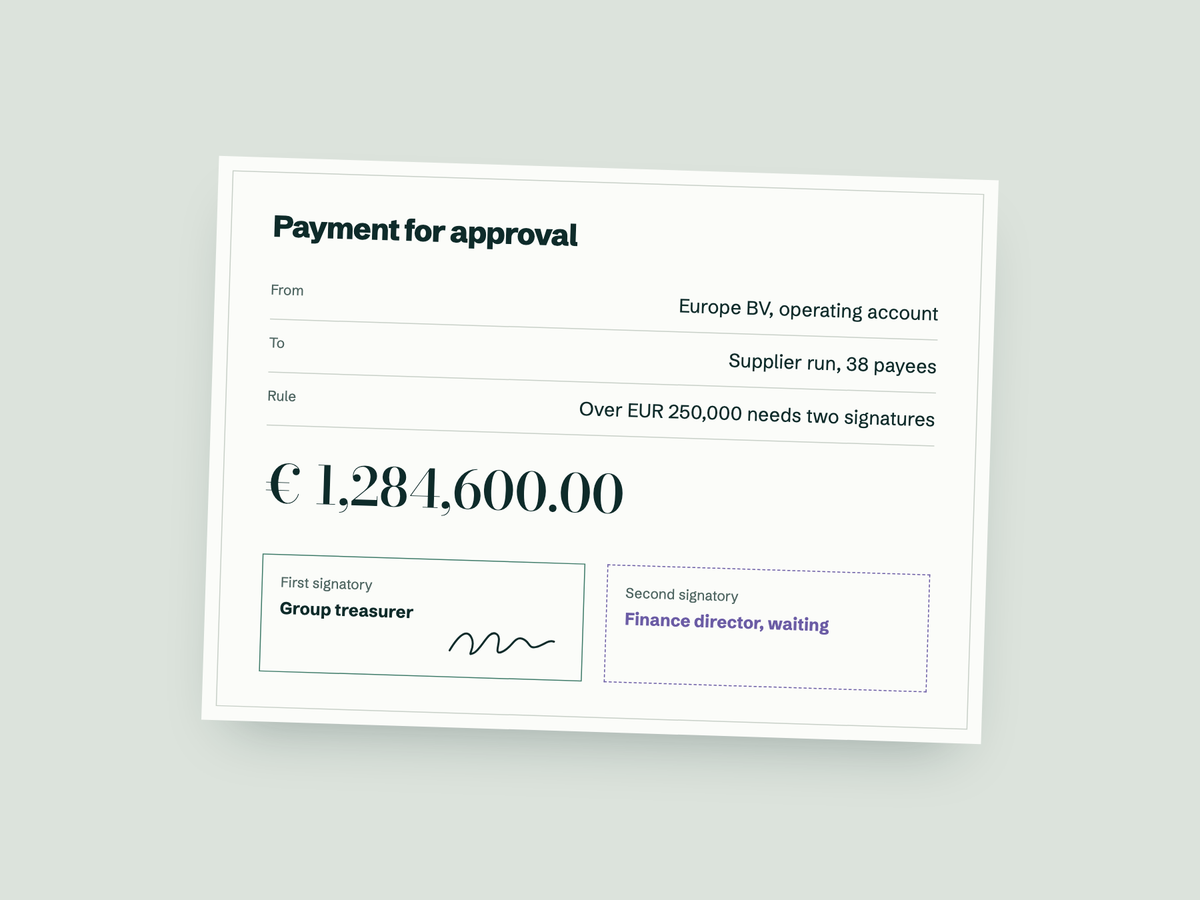
Approvals that follow your bank mandate
Payments created from the forecast route to the right signatories, by amount and by currency, before anything reaches the bank.
Variances, caught the day they happen
With actuals sitting next to the forecast, we caught a duplicated supplier payment the morning it cleared, not three weeks later at month end.
Tomás FerreiraFinance Director, logistics group We used to spend the first hour of every day logging into bank portals. Now the position is waiting when we sit down, and the morning call starts with decisions instead of numbers.
Priya RamanGroup Treasurer, food manufacturer
Score last quarter’s forecast against the bank
The forecast starts from the same reconciled position as the morning view.